
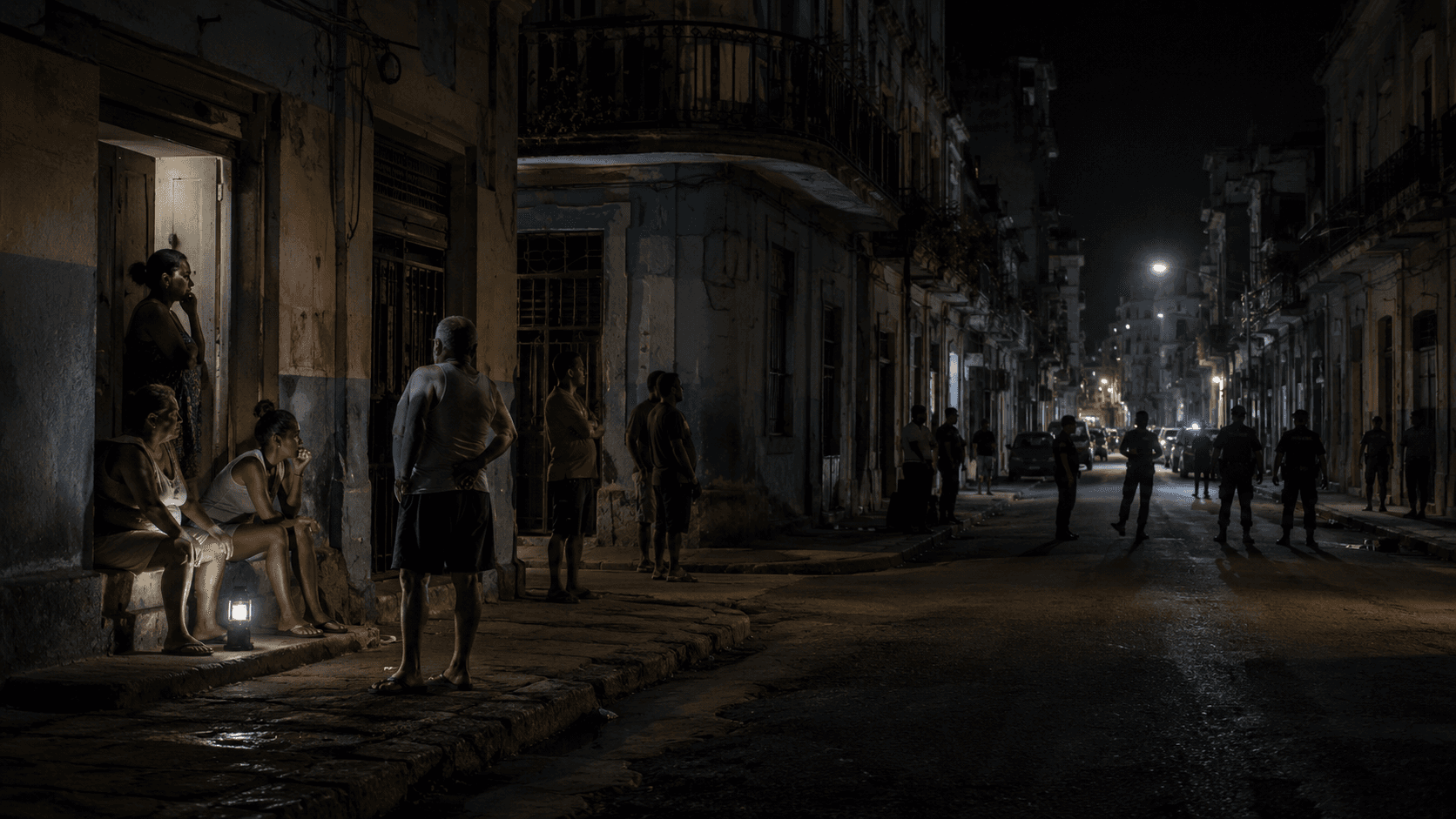
Cuba fuel crunch pressures deepened on May 13, 2026, when Energy and Mines Minister Vicente de la O Levy said the country had run out of diesel and fuel oil used to help generate electricity.
The warning came as Havana faced some of its harshest rolling blackouts in decades, with Reuters reporting that many neighborhoods were without power for 20 to 22 hours a day.
Reuters also reported scattered protests in multiple Havana neighborhoods that night. Residents banged pots despite police presence, a visible sign of public frustration in a country where street demonstrations remain politically sensitive.
Context
Cuba has struggled for years with an aging electric grid, fuel shortages, limited foreign currency, and reduced access to imported oil. Those pressures have repeatedly forced authorities to ration electricity and prioritize scarce fuel for essential services.
The latest outage cycle has hit Havana especially hard because the capital is usually shielded more than many provinces from the worst cuts. When blackouts stretch through most of the day in Havana, the crisis becomes more visible and harder for authorities to contain.
The fuel shortage is also unfolding during a broader economic squeeze. Cubans have already faced shortages of food, medicine, public transport, and basic services, making prolonged power cuts more disruptive for households and businesses.
Mechanism
Diesel and fuel oil matter because they feed distributed generation units and other parts of Cuba's electricity system. When those fuels are unavailable, the grid must rely more heavily on domestic crude, natural gas, and renewable sources.
Minister Vicente de la O Levy said the national grid was operating in a critical condition. Reuters reported his statement that Cuba had no diesel or fuel oil left, leaving the system with fewer options to cover demand.
That shortage turns a supply problem into a daily living problem. Refrigerators stop working, water pumps fail, phones cannot charge, small shops lose sales, and families spend long nights in heat and darkness.
Stakeholders
The most immediate pressure falls on Cuban households. Long blackouts interrupt cooking, water access, refrigeration, communication, and sleep.
Small businesses are also exposed. Cafes, private restaurants, repair shops, and informal sellers depend on electricity for lighting, payment systems, refrigeration, and equipment.
Hospitals, water systems, schools, transport operators, and local authorities face a harder balancing act. Scarce fuel must be stretched across power generation, emergency services, food distribution, and public order.
The Cuban government faces political pressure because the blackouts are not only technical failures. They are now tied to public anger, economic hardship, and the visible limits of state capacity.
Data and Evidence
The clearest new figure is the reported blackout duration in Havana. Reuters reported that many districts were without electricity for 20 to 22 hours a day as the shortage intensified.
The clearest official element is the minister's fuel statement. De la O Levy said Cuba had run out of diesel and fuel oil, according to Reuters and other reporting based on his public remarks.
Reuters separately reported that a correspondent witnessed scattered protests in several Havana neighborhoods on May 13, 2026. The demonstrations included residents banging pots while police were present.
Associated Press reporting from early May 2026 described Cuba's energy system as under severe strain, with workers in the electric and petroleum sectors trying to maintain limited supply amid fuel shortages and an unstable grid.
Analysis
The strongest explanation is that Cuba's energy crisis has moved from chronic shortage to acute system stress. The country has fewer imported fuel buffers, a fragile grid, and limited ability to quickly replace diesel and fuel oil with reliable alternatives.
Solar and other renewable sources can reduce fuel dependence over time, but they do not solve the immediate night-time and grid-stability problem without storage, transmission improvements, and reliable backup generation.
The protests matter because blackouts turn a national energy shortage into a neighborhood-level political event. People may tolerate short outages, but power cuts lasting most of the day make daily routines impossible.
The government's challenge is practical as much as political. Even if officials promise repairs or new energy sources, residents measure the crisis by whether lights, fans, water pumps, and refrigerators work at home.
Counterpoint
Cuban officials have long argued that external pressure, including U.S. sanctions and restrictions, worsens the country's ability to buy fuel and finance repairs. That argument is central to the government's explanation of the crisis.
A serious counterpoint is that Cuba's power problems also reflect internal weaknesses: old plants, limited investment, low reserves, and a system that has repeatedly failed under demand and supply shocks.
The available reporting does not prove that one cause alone explains the current breakdown. The verified picture is a collision of fuel scarcity, infrastructure weakness, financial limits, and rising public frustration.
Consequence
The immediate consequence is deeper disruption to basic services in Havana and beyond. Extended blackouts can affect water access, food preservation, transport, communications, medical care, and public safety.
The political consequence is rising risk of unrest. Reuters' report of scattered protests does not mean a nationwide movement is underway, but it shows that anger over electricity shortages is spilling into the streets.
The economic consequence is further lost activity. When shops, factories, transport routes, and service providers cannot count on power or fuel, the wider economy slows and household hardship compounds.
What to Watch
The first issue to watch is whether Cuba secures new diesel or fuel oil shipments. Any delivery could ease pressure, but temporary cargoes may not fix the underlying shortage.
The second issue is whether blackout hours decline in Havana. If the capital continues facing 20-to-22-hour outages, public frustration could become harder to manage.
The third issue is the state's response to protests. A security-heavy approach may quiet streets in the short term, but it would not address the everyday problems driving anger.
The fourth issue is whether officials provide a credible timetable for restoring generation. Without clear fuel supply, grid repairs, or demand reduction, the crisis is likely to keep testing both public patience and state capacity.
Sources
Cuba has run out of diesel and fuel oil amid US oil blockade, minister says — Reuters — May 14, 2026
Protests break out in Havana over power cuts — Reuters — May 14, 2026
Cuba's electric and petroleum workers celebrate their colleagues during massive rally — Associated Press — May 2026
Cuba anuncia que ha agotado todas sus reservas de combustible: No tenemos absolutamente nada — El País — May 14, 2026