
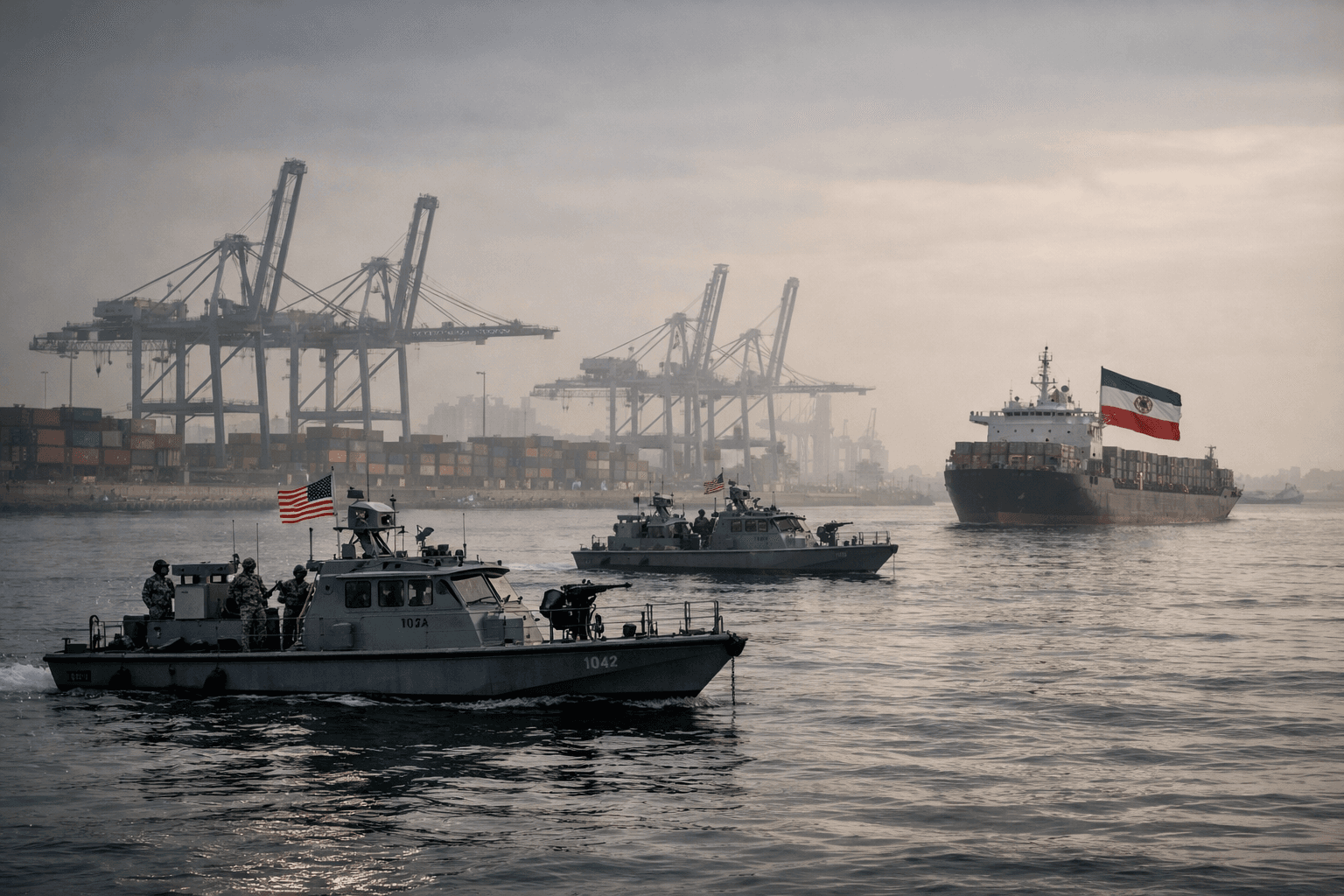
US-Iran Islamabad talks could restart within days, a sign that diplomacy may continue even as Washington tightens pressure at sea. On April 14, 2026, Reuters reported that U.S. and Iranian negotiating teams could return to Islamabad later this week, citing four sources. The same day, Reuters separately reported that the United States began a blockade of Iranian ports, a step that keeps shipping restrictions in place even as both sides signal they are still talking.
What changed
Reuters reported on April 14 that U.S. and Iranian negotiating teams could reconvene in Islamabad later in the week, citing four sources. The report followed earlier high-level discussions in Pakistan’s capital that ended without a breakthrough but left open the possibility of another round.
In parallel, Reuters reported on April 14 that the United States began a blockade of Iranian ports. The blockade is intended to squeeze Iran economically and constrain maritime movement tied to the conflict, while U.S. officials continued to frame negotiations as possible if Iran meets core U.S. demands.
Why it matters
Shipping and energy risk is being priced in real time
A blockade of Iranian ports is a tangible escalation because it targets physical trade flows rather than rhetoric. Even when oil prices move down on hopes of dialogue, the underlying risk remains that maritime restrictions can disrupt supply chains, insurance, and routing decisions quickly.
Reuters reported that oil prices eased below $100 a barrel amid hopes that dialogue could resume, underscoring how heavily markets are leaning on the prospect of talks to prevent a wider disruption.
Gulf markets are reacting to diplomacy signals, not a settlement
Reuters reported on April 14 that major Gulf stock markets climbed as traders weighed prospects for a U.S.–Iran resolution, even as shipping restrictions remained in place. That pattern is a reminder that equities can rally on incremental signs of engagement without any confirmed agreement on core disputes.
In practice, a diplomatic “signal” can lift sentiment, but the blockade and any related restrictions still shape corporate costs and investor expectations for the region.
The talks are happening under a coercion framework
The combination of a blockade and a possible return to talks means negotiations are unfolding under direct pressure. That matters because it can narrow the space for compromises: Iran can treat the blockade as a precondition issue, while the United States can treat concessions as contingent on Iran’s steps.
Reuters described the earlier Islamabad discussions as the most significant high-level talks since Iran’s 1979 Islamic Revolution, but reported they ended without a breakthrough. That gap between “historic” engagement and “no deal” is the operating context for any next meeting.
What’s known from reported negotiations
Reuters reported that U.S. Vice President JD Vance and Iranian parliamentary speaker Mohammad Baqer Qalibaf led the delegations in Islamabad, with Pakistan facilitating. Reuters also reported that issues on the table have included Iran’s nuclear program, sanctions, energy disruptions, and the Strait of Hormuz.
The critical point is not that the parties are aligned, but that both sides have continued to describe talks as possible even after inconclusive sessions.
What happens next
A second Islamabad round is possible, but not assured
Reuters framed a return to the table as a possibility rather than a confirmed schedule, citing sources. That posture matters for readers because it signals contingency: talks can be revived quickly, but can also be delayed or derailed by events at sea.
Pakistan has positioned itself as a mediator. Reuters reported on April 13 that Pakistani Prime Minister Shehbaz Sharif said a “full effort” was still under way to resolve the U.S.–Iran conflict after the Islamabad round ended without an agreement.
The blockade is the mechanism that keeps pressure constant
Even if negotiators meet, the blockade is a continuing constraint that shapes timelines and leverage. Mechanically, shipping restrictions can affect trade volumes, freight costs, and risk premiums immediately, which in turn feeds into oil prices and regional asset pricing.
A practical consequence is that companies moving goods through the Gulf region may face higher compliance checks, more conservative routing choices, and costlier insurance while the situation remains unresolved.
Bottom line for readers
The near-term story is not a peace deal; it is the coexistence of talks and enforcement. Reuters reporting points to a potential return to US-Iran Islamabad talks this week, while the U.S. blockade of Iranian ports remains a live pressure point that can change commercial behavior and market pricing before any agreement is reached.