
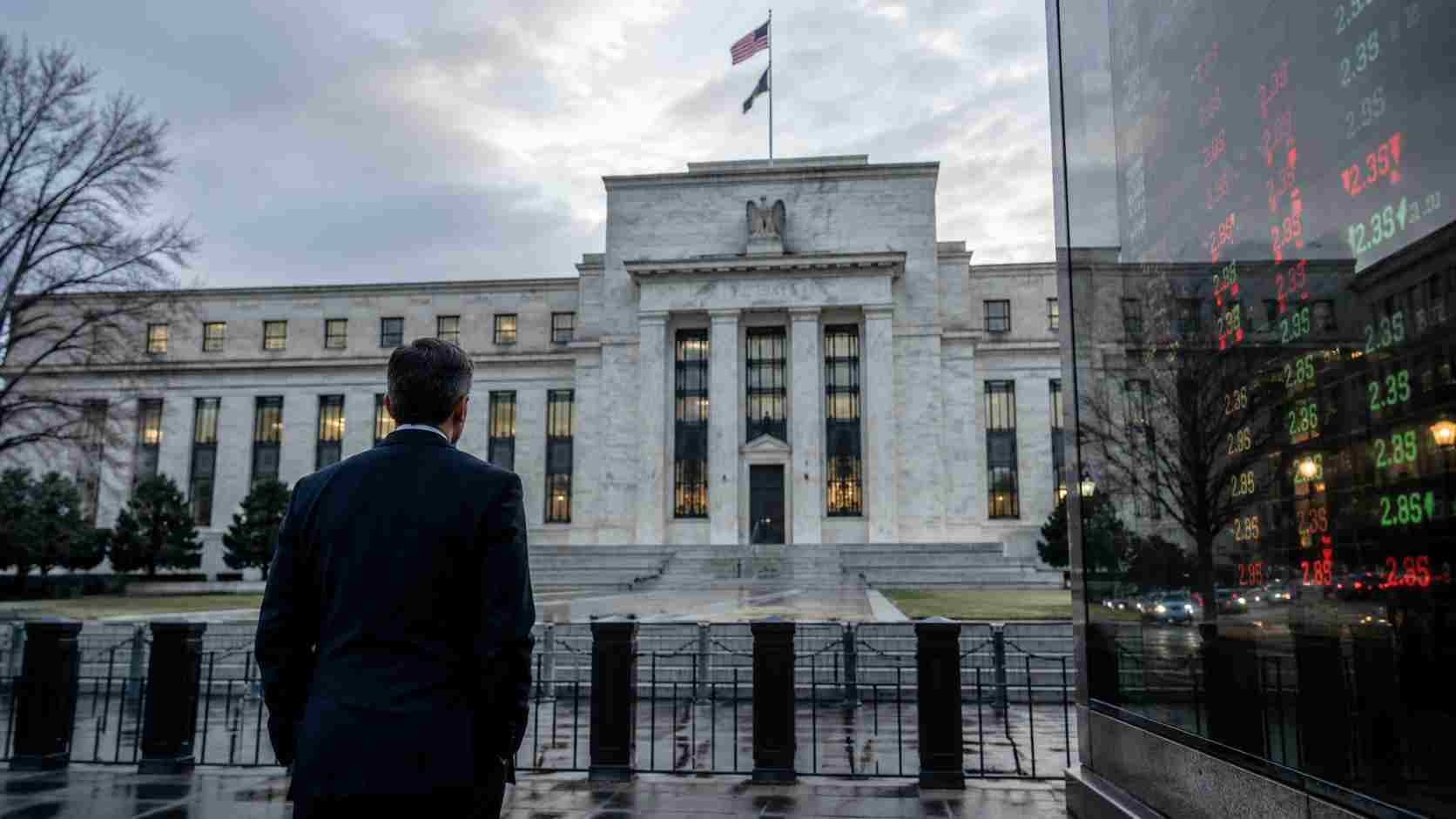
Federal Reserve chair Kevin Warsh was confirmed by the U.S. Senate on May 13, 2026, in a 54-45 vote, putting a new leader at the central bank as inflation pressure was moving higher again.
The confirmation places Warsh in charge of monetary policy at a sensitive moment for households, investors, and the White House. The immediate issue is whether the Fed can still move toward rate cuts while energy-driven inflation and supply disruption complicate the outlook.
The Senate vote was mostly along party lines, according to official Senate records and major news reports. Warsh succeeds Jerome Powell as chair, while Powell is expected to remain on the Federal Reserve Board.
Context
Warsh is a former Federal Reserve governor who served from 2006 to 2011 and has been associated with criticism of the Fed’s large balance sheet and post-crisis policy framework. Reuters described his planned agenda as a push for “regime change” at the central bank, including changes to the Fed’s asset holdings, policy framework, and public communications.
That agenda matters because the Federal Reserve chair does not set interest rates alone. Policy decisions are made by the Federal Open Market Committee, but the chair shapes the debate, the public message, and the institution’s response to pressure from markets and elected officials.
Warsh’s confirmation also follows a period of political tension around the Fed. President Donald Trump has repeatedly pushed for lower interest rates, while inflation remains above the Fed’s 2 percent target.
Mechanism
The policy conflict is straightforward. If inflation rises, the Fed normally has less room to cut interest rates because easier policy can add demand and weaken inflation credibility.
If growth weakens or markets tighten sharply, the Fed can face pressure to lower rates anyway. That tension becomes more difficult when the inflation shock comes from energy and supply disruption, because higher rates cannot quickly produce oil or repair broken supply routes.
The chair’s role is to explain how the Fed weighs those trade-offs. Under Warsh, investors will watch whether the Fed emphasizes inflation control, growth support, institutional reform, or some mix of all three.
Stakeholders
Households are exposed through borrowing costs, gasoline prices, rents, and job security. If inflation stays high, paychecks buy less; if rates stay high for longer, mortgages, credit cards, and business loans remain expensive.
Financial markets are exposed through Treasury yields, the dollar, equities, and risk assets. A less predictable Fed can lift the policy uncertainty premium investors demand for holding longer-term bonds or volatile assets.
The White House also has a stake because rate cuts could ease financing conditions, but visible pressure on the Fed could weaken confidence in central bank independence. Banks, exporters, importers, and emerging markets all feel the effects when U.S. rates and the dollar shift.
Data and Evidence
The official Senate roll call lists the nomination of Kevin Warsh, of Florida, to be chairman of the Board of Governors of the Federal Reserve Board as confirmed on May 13, 2026. The vote was recorded as 54-45.
The Bureau of Labor Statistics reported that the Consumer Price Index rose 3.8 percent over the 12 months ending in April 2026, up from 3.3 percent in March. Core CPI, excluding food and energy, rose 2.8 percent over the year.
Energy was the most visible pressure point. The BLS reported that the energy index rose 17.9 percent over the 12 months ending in April, while gasoline rose 28.4 percent over the same period.
Reuters reported that producer prices also rose sharply in April and that markets were pricing in the possibility of no rate cuts this year. That is the financial consequence of the confirmation landing alongside hotter inflation data.
Analysis
The strongest explanation is that Warsh is inheriting a credibility test rather than a normal leadership transition. A new chair can usually use early meetings to define priorities, but this transition begins with inflation moving away from target and political pressure pointing toward easier policy.
That combination can raise the cost of ambiguity. If Warsh sounds too willing to cut, bond investors may demand higher yields to compensate for inflation risk. If he sounds too hawkish, risk assets may reprice around the chance that policy stays tight longer.
The practical result is not only about the next rate decision. It is about whether investors believe the Fed will make that decision based on inflation, employment, and financial conditions rather than political preference.
Counterpoint
There is a serious counterargument. A supply-driven energy shock does not automatically justify higher interest rates, especially if core inflation remains more contained than headline inflation.
Warsh may also be constrained by the Fed’s structure. The chair has influence, but other governors and regional Fed presidents vote, debate, and shape policy. A reform agenda can take time, and the central bank’s institutional habits are difficult to change quickly.
It is also possible that markets are overstating the degree of policy change. Warsh has promised no specific rate path, and incoming data will still matter.
Consequence
The immediate consequence is a more uncertain rate outlook. The same confirmation that gives the Fed a new chair also forces investors to reassess how the central bank will respond to inflation that is being pushed up by energy and supply stress.
That uncertainty can affect Treasury yields, currency markets, and equity valuations before the Fed changes a single rate. It can also make every public comment from Warsh more market-sensitive than usual.
For the public, the issue is simpler: prices are rising faster, and the cost of borrowing may not fall as soon as many households and businesses hoped.
What to Watch
The next major test is the Fed’s June 2026 policy meeting, when officials will update their rate projections and explain how they see inflation, employment, and financial conditions.
Investors will watch whether Warsh changes the tone of Fed communication, whether dissent grows inside the rate-setting committee, and whether the central bank signals that rate cuts are delayed.
The other key question is whether energy inflation broadens into other prices. If it does, Warsh’s first months as chair could be defined by a harder inflation fight than markets expected.
Sources
Sources = Roll Call Vote 119th Congress, 2nd Session, Vote Number 120 — U.S. Senate — May 13, 2026 Sources = Consumer Price Index News Release, April 2026 — Bureau of Labor Statistics — May 12, 2026 Sources = Warsh clinches Senate approval to be Fed's next chair as inflation intensifies — Reuters — May 13, 2026 Sources = Warsh has big plans for the Fed, but results may take time — Reuters — May 13, 2026 Sources = Senate confirms Trump pick Warsh as chairman of the Federal Reserve, following Powell — Associated Press — May 14, 2026