
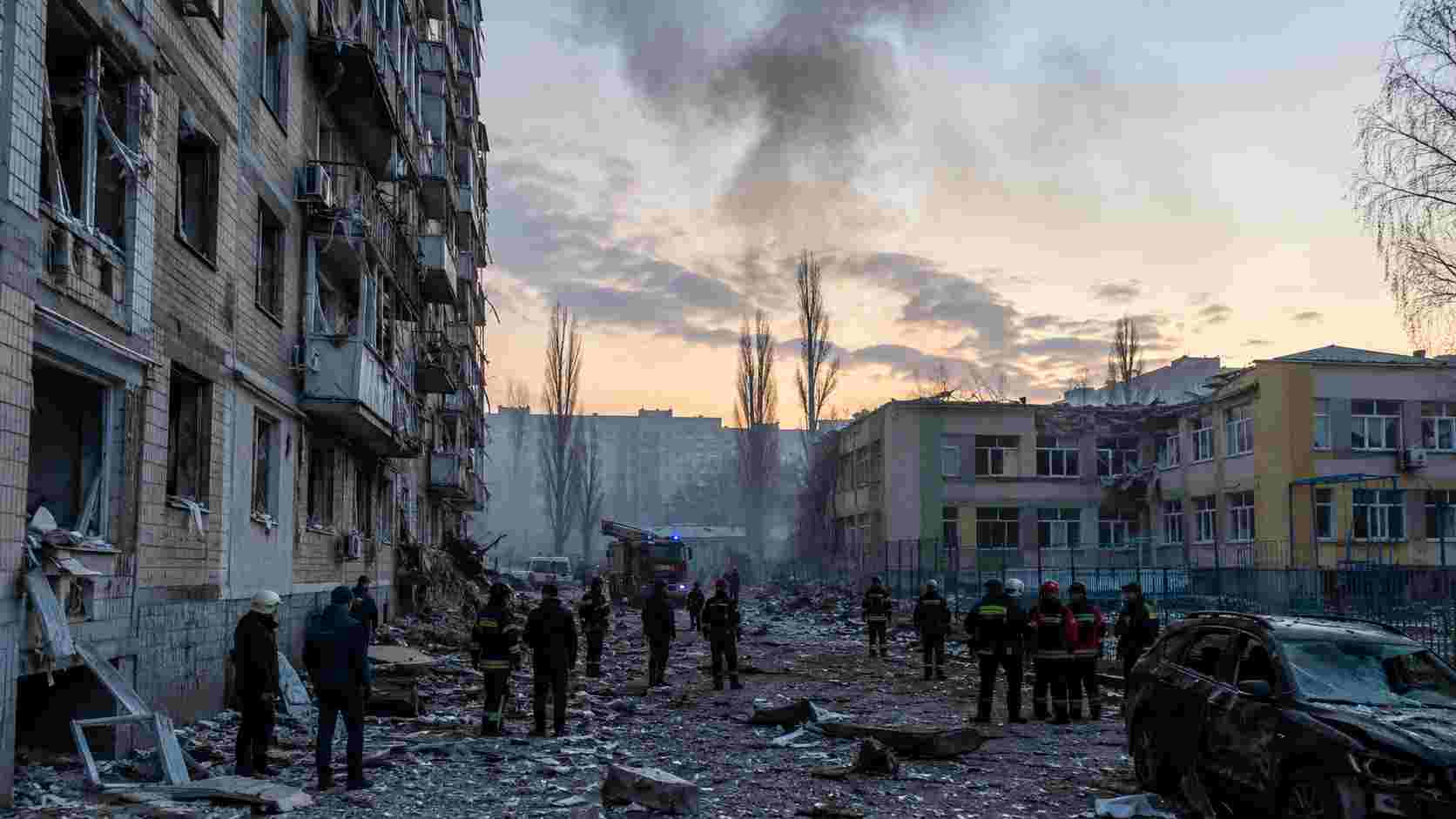
Russian strikes hit multiple Ukrainian cities overnight into May 18, 2026, Ukrainian officials reported, killing one person and injuring more than 30 others across Odesa, Dnipro, Zaporizhzhia and Kherson.
The reported attacks included drone and missile strikes on urban areas and shelling in the south. Officials described damage to residential buildings, a school or lecture facility, and a kindergarten, underscoring how the war’s long-range attacks continue to reach civilian spaces far from front-line trenches.
Reuters reported the casualty figures based on Ukrainian officials and said it could not independently verify the battlefield reports. That attribution matters because wartime casualty counts and damage assessments often change as emergency crews inspect strike sites.
Context
Russia’s full-scale invasion of Ukraine began on February 24, 2022, and has evolved into a war fought both along front lines and through repeated missile, drone and artillery attacks on cities. Ukraine has also expanded its own long-range drone operations against targets inside Russia, increasing the cross-border dimension of the conflict.
The May 18 reports came after a weekend of Ukrainian drone strikes on Russian territory, including attacks that Russian officials said killed people in the Moscow region and Belgorod. Ukrainian President Volodymyr Zelenskyy has defended strikes inside Russia as a response to Russian attacks on Ukraine.
That sequence does not independently establish why each Russian strike was launched. It does show the broader pattern: both sides are using long-range weapons to put pressure beyond the immediate battlefield.
Mechanism
According to Ukrainian officials cited by Reuters, Odesa was hit by drones that damaged residential buildings and educational sites. The reported damage included a school or lecture hall and a kindergarten, and two people were reported injured there, including an 11-year-old boy.
Dnipro was reportedly struck by missiles, with officials saying 18 people were injured, including a two-year-old girl and a 10-year-old boy. Ukrainian reporting cited local officials saying several adults required hospitalization.
Zaporizhzhia officials separately reported three people injured in Russian attacks. In Kherson, officials reported one person killed and nine others injured by shelling, according to Reuters.
Stakeholders
The immediate stakeholders are residents in the targeted cities, particularly families living in apartment blocks and neighborhoods near damaged schools and other civilian sites. For them, the consequence is not abstract: windows are blown out, classrooms are damaged, children are treated for injuries, and daily routines become emergency decisions.
Ukrainian regional and national officials face pressure to maintain air defenses, restore damaged infrastructure and document strikes for domestic and international audiences. Emergency services face the practical burden of rescue, medical evacuation and damage assessment under the risk of follow-on attacks.
Russia’s military and political leadership faces international scrutiny over strikes reported to have hit civilian areas. Moscow has repeatedly denied intentionally targeting civilians, while Ukraine and Western governments have accused Russia of systematically attacking civilian infrastructure during the war.
Data and Evidence
The central confirmed reporting available from Reuters on May 18 said Ukrainian officials reported one person killed and more than 30 injured in overnight attacks across several cities. The same report identified Odesa, Dnipro, Zaporizhzhia and Kherson as affected locations.
The reported city-level figures were two injured in Odesa, 18 injured in Dnipro, three injured in Zaporizhzhia, and one killed with nine injured in Kherson. Those figures may be updated as hospitals, police and regional administrations complete assessments.
The damage reported in Odesa included residential buildings and educational facilities. The Dnipro reports centered on a missile strike that wounded children as well as adults. Kherson, which lies close to the front and has faced frequent shelling, again saw casualties from attacks on the city or region.
Reuters stated it could not independently verify the battlefield reports. That limitation should remain attached to the casualty count unless independent confirmation, official documentation or additional verified reporting becomes available.
Analysis
The strongest explanation is that Russia’s strike campaign is continuing to combine drones, missiles and artillery against Ukrainian urban centers while battlefield fighting remains unresolved. The use of different weapons across several cities forces Ukraine to spread air-defense, rescue and repair resources across a wide geographic area.
The attacks also show why civilian harm remains central to the war’s political impact. A strike that damages a kindergarten or residential block changes local behavior immediately: parents keep children closer, commuters avoid exposed routes, and officials divert money and crews from long-term recovery to urgent repairs.
The military effect is harder to judge from the available reporting. The reported damage and injuries point clearly to civilian consequences, but the public evidence cited so far does not establish the intended target in every location.
Counterpoint
Russia denies intentionally targeting civilians, and in wartime both governments frame strikes through their own political and military narratives. That means independent verification is essential before treating claims about targets, motives or weapons used as settled fact.
There is also uncertainty about final casualty totals. Early reports from regional officials can undercount or overcount injuries as people seek treatment later, damaged buildings are searched, and duplicate reports are reconciled.
A serious counterpoint is that Ukraine has also expanded long-range attacks inside Russia, including the weekend strikes reported near Moscow and in other regions. That does not erase Russia’s responsibility for strikes it carries out, but it does show that the long-range phase of the war is increasingly affecting civilians and infrastructure on both sides.
Consequence
The immediate consequence is a higher civilian toll in several Ukrainian cities and renewed pressure on Ukraine’s air defenses, emergency services and local administrations. Schools, kindergartens and apartment blocks are not easily replaced, and damage to them deepens the social cost of the war.
For diplomacy, the strikes make any near-term de-escalation harder. Civilian casualties create public anger, stiffen political positions and make concessions more difficult for leaders to sell at home.
For the battlefield, the attacks reinforce the importance of drones and missiles as tools of pressure beyond front-line combat. Even when territorial lines move slowly, cities can still absorb sudden damage overnight.
What to Watch
Watch for updated casualty figures from Ukrainian regional administrations, police and emergency services on May 18 and May 19, 2026. The most important next detail is whether the reported injured count rises as more victims seek treatment.
Also watch whether Ukraine releases additional information about the weapons used, air-defense interceptions, and exact sites damaged in each city. Those details will help separate confirmed facts from early wartime claims.
The broader question is whether the latest strikes trigger another round of Ukrainian long-range attacks inside Russia or a renewed push by Ukraine’s partners to provide additional air-defense systems. The immediate event is local, but the consequence reaches into military planning, civilian protection and diplomacy.
Sources
Sources = Russian attacks kill one, injure more than 30 in Ukraine overnight, officials say — Reuters — May 18, 2026 Sources = Russian drones, missiles strike residential buildings in Ukraine, injuring civilians — The Kyiv Independent — May 18, 2026 Sources = The number of casualties following the Russian attack on Dnipro has risen to 18 people, including a 2-year-old girl — Ukrainian National News — May 18, 2026 Sources = Number of injured in Zaporizhzhia attack rises to three — Ukrinform — May 15, 2026 Sources = Russian drone attacked Kherson, killing one and injuring nine — Mezha — May 15, 2026