
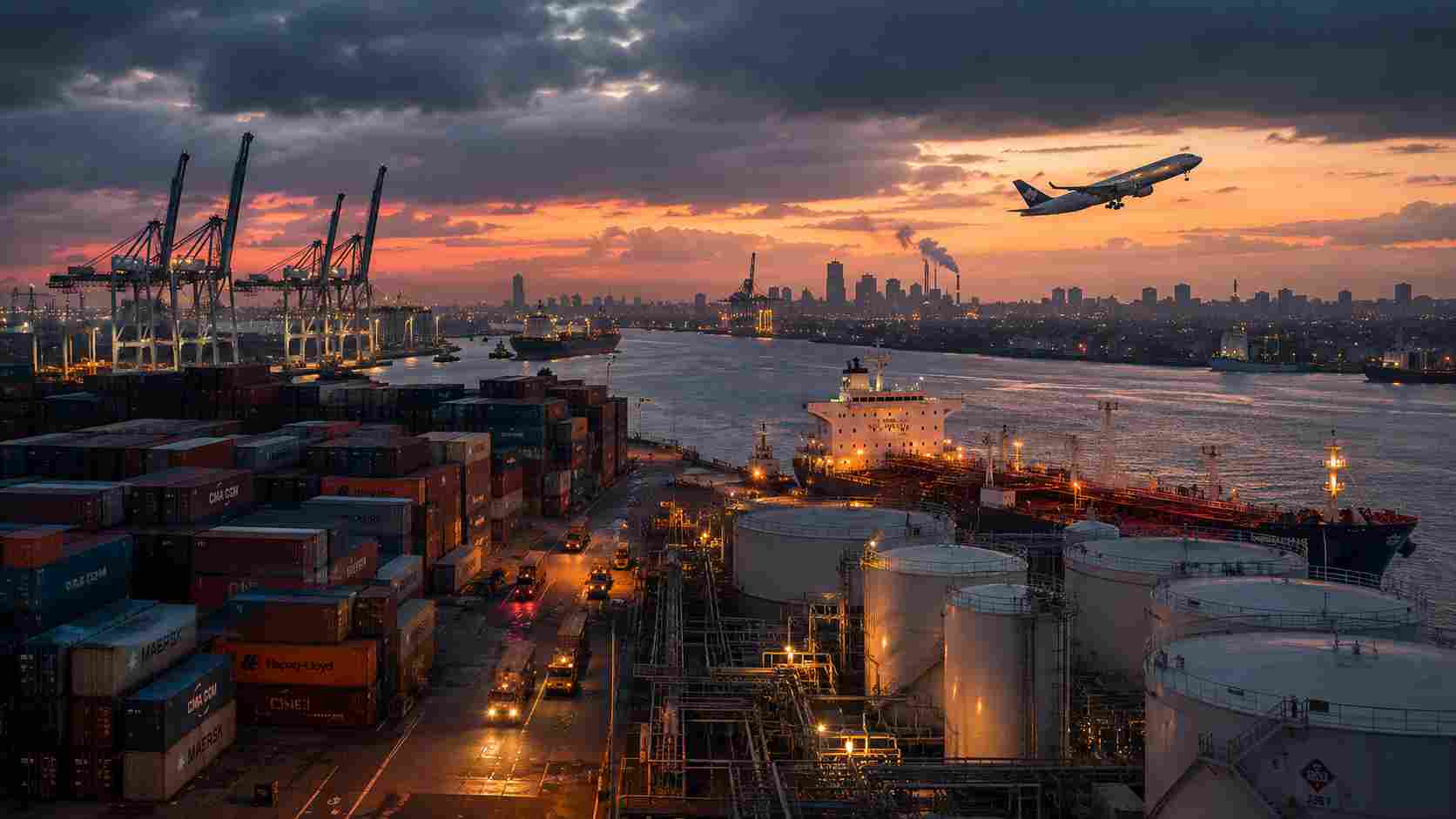
Iran war costs are now showing up as a corporate earnings problem, not just a geopolitical risk. A Reuters analysis published on May 18, 2026 estimated that the conflict has imposed at least $25 billion in costs on global companies so far, with airlines accounting for the largest quantified share at nearly $15 billion.
The pressure is coming through higher oil and jet fuel prices, disrupted trade routes, and supply chain strain tied to risks around the Strait of Hormuz. That matters because the costs do not stop with energy companies or shippers. They move through ticket prices, delivery bills, factory inputs, retail margins, and corporate guidance.
Context
The Strait of Hormuz is one of the world’s most important energy chokepoints, so conflict risk around the passage can quickly affect oil, fuel and shipping markets. Companies that depend on long-distance transport, petroleum-based inputs, or predictable delivery schedules are exposed even if they do not operate in the region.
Reuters has reported for weeks that the conflict has darkened outlooks across sectors, from airlines to manufacturers and consumer-facing companies. Earlier reporting described how higher fuel and input costs were affecting products as varied as flights and paint, while shipping disruption created unusual winners and losers in logistics.
The result is a margin story with a delayed fuse. Some companies can pass higher costs to customers. Others absorb the hit, cut production, revise forecasts, reduce spending, or seek support from lenders and governments.
Mechanism
The main mechanism is cost transmission. Oil price shocks lift jet fuel, diesel, marine fuel and petrochemical costs. Freight disruption adds rerouting expenses, delays and insurance pressure. Supply chain uncertainty raises working-capital needs because companies may hold more inventory, pay more for faster shipping, or lose sales when goods arrive late.
Airlines are especially exposed because fuel is one of their largest operating costs and fares cannot always rise fast enough to match fuel spikes. Reuters reported in March 2026 that U.S. airlines were facing a fuel-driven financial shakeout after jet fuel rose sharply from levels seen before the first U.S.-Israeli strikes on Iran.
For manufacturers and retailers, the impact can be less visible but still serious. A company may pay more for packaging, plastics, chemicals, ingredients, transport and warehousing at the same time customers resist price increases. That combination squeezes gross margins and raises the risk of weaker full-year guidance.
Stakeholders
Airlines face the clearest immediate pressure because fuel costs hit cash flow quickly. Passengers may see higher fares or fewer routes if carriers try to defend margins by cutting capacity.
Shipping and logistics companies face a more mixed picture. Some carriers may benefit from higher freight rates when capacity is tight, while customers pay more and deal with delays. Reuters reported on April 23, 2026 that European logistics firms were benefiting from shipping chaos even as disruption persisted.
Consumer goods companies, automakers, restaurants and retailers are pressured from the other side. They must decide whether to raise prices, accept lower margins, reduce promotions, slow production, or trim costs elsewhere. Investors are exposed because the cost burden can weaken earnings estimates before it is fully visible in reported results.
Data and Evidence
The central figure is Reuters’ estimate of at least $25 billion in costs on global companies so far. The same Reuters analysis identified airlines as the largest chunk of the quantified burden, at nearly $15 billion.
Reuters also reported that hundreds of companies had flagged war-related disruption or cost pressure, including measures such as price increases, production cuts, dividend suspensions, and requests for government aid. The tally was described as ongoing, which means the final burden could rise if fuel prices, shipping disruption or route uncertainty continue.
Separate Reuters reporting supports the sector pattern. On April 22, 2026, Reuters reported that the war was lifting costs and darkening outlooks across products and transport. On March 30, 2026, Reuters reported that U.S. airlines faced a fuel-driven financial shakeout. On May 13, 2026, Reuters reported that Hapag-Lloyd’s first-quarter result was hit by disruptions including weather and Iran-war-related trade problems.
Analysis
The strongest explanation is that companies are facing a broad input-cost shock before demand has fully adjusted. Energy and freight sit inside nearly every modern supply chain, so a regional war can become a global earnings issue when it changes the cost of moving people, goods and raw materials.
The pressure is sharper because many companies are already managing cautious consumers, uneven demand, and investor scrutiny after earlier inflation shocks. When costs rise in that environment, companies have less room to raise prices without losing volume.
That makes guidance risk important. Earnings reports may show only part of the damage at first because contracts, hedges and inventory cycles delay the impact. But if higher costs persist, companies eventually have to recognize them through weaker margins, higher prices, reduced output, or lower forecasts.
Counterpoint
The cost burden is not evenly distributed, and not every company loses. Logistics firms with pricing power may gain from disruption. Energy producers can benefit from higher oil and fuel prices. Airlines with better hedging, stronger balance sheets, or premium demand may manage the shock better than weaker rivals.
There is also uncertainty around the final size of the hit. Reuters’ $25 billion estimate is based on quantified corporate disclosures and analysis so far, not a complete measure of every private or delayed cost. Some expenses may be offset later if fuel prices fall, routes reopen, or companies successfully pass costs to customers.
Consequence
The immediate consequence is pressure on corporate margins across energy-sensitive sectors. Companies may respond with price increases, cost cuts, production changes, or more cautious earnings guidance.
For consumers, the practical effect may be higher travel costs, slower deliveries, fewer discounts, or more expensive goods. For investors, the risk is that the war’s earnings impact appears gradually across multiple quarters rather than in one clean adjustment.
The wider economic consequence is inflation persistence. If fuel, freight and inputs stay elevated, central banks and governments may face a harder trade-off between protecting growth and preventing another round of price pressure.
What to Watch
The next test is quarterly earnings guidance from airlines, consumer multinationals, manufacturers and shipping-linked companies. Investors will be watching whether executives describe the Iran war as a short-term disruption or a lasting cost base reset.
Oil prices, jet fuel benchmarks, freight rates and Strait of Hormuz risk will remain the clearest indicators. Any sign of reduced shipping access, longer rerouting, or higher insurance costs could deepen the burden.
The most important question is whether companies can pass higher costs to customers without damaging demand. If they cannot, the Reuters tally may become an early marker of a broader profit-margin squeeze.
Sources
Sources = Iran war saddles global companies with $25 billion bill - and counting — Reuters — May 18, 2026
Sources = From paint to flights, Iran war lifts costs, darkens outlooks — Reuters — April 22, 2026
Sources = US airlines face fuel-driven financial shakeout — Reuters — March 30, 2026
Sources = Iran war boosts European logistics profits as shipping chaos persists — Reuters — April 23, 2026
Sources = Hapag-Lloyd posts Q1 net loss on severe weather, Iran war disruptions — Reuters — May 13, 2026