
Opening
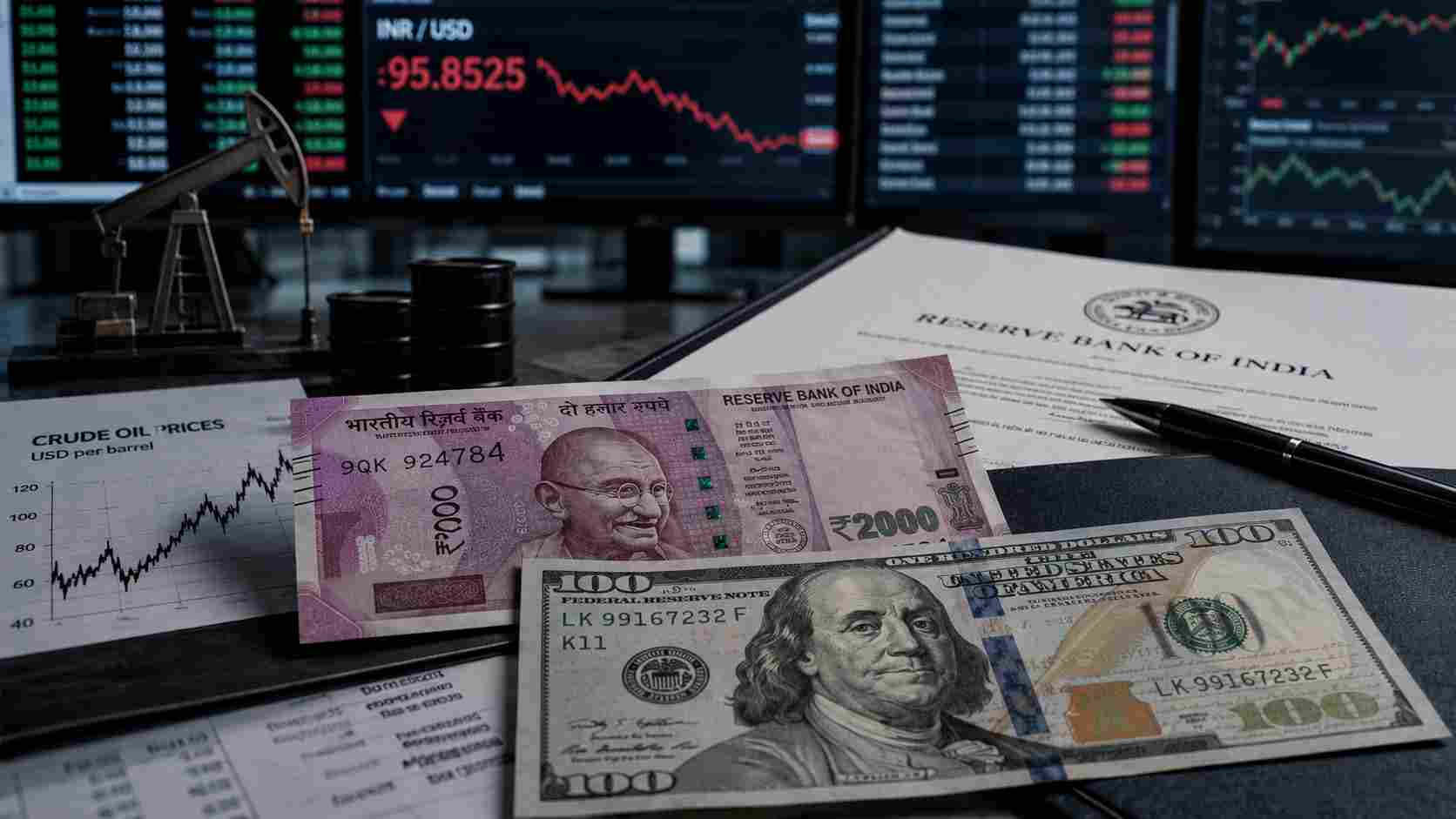
Indian rupee weakness reached a new pressure point after Reuters reported that the currency fell to 95.8525 per U.S. dollar, a record low. The move was linked to high oil prices, persistent foreign portfolio outflows, and concern that India’s external balances are becoming harder to manage.
The fall matters because India is a large energy importer, so a weaker currency can make oil, gas, transport, and imported goods more expensive. That can feed inflation, pressure company costs, and narrow the room available to policymakers.
Context
The rupee’s decline comes during a period of stress for emerging-market currencies exposed to energy imports and capital outflows. Reuters reported that the rupee had already touched a record low of 95.7950 per dollar on May 13, 2026, before falling further to 95.8525 in the latest move.
Currency weakness is not only a market-price story. For households, it can show up through dearer fuel, transport, and imported consumer goods. For companies, it can raise the local-currency cost of dollar debt, imported inputs, and hedging.
India’s exposure is especially important because Reuters reported that the country relies on imports for more than 90 percent of its crude oil and about half of its natural gas. That means higher global energy prices and a weaker rupee can work together, increasing the local cost of fuel imports.
Mechanism
A currency weakens when demand for foreign currency rises relative to demand for the local currency. In this case, Reuters linked the pressure to high oil prices, foreign portfolio outflows, overseas debt repayments, and importer hedging demand.
Oil importers need dollars to pay for crude and other energy purchases. When oil prices are elevated, those dollar needs can rise. At the same time, foreign portfolio outflows reduce support for the rupee because overseas investors sell Indian assets and move capital elsewhere.
The pressure can become self-reinforcing. Importers may hedge more aggressively when they expect more rupee weakness, which increases near-term dollar demand. Investors may also hesitate to add exposure until they see the currency stabilize.
Stakeholders
The Reserve Bank of India is the most immediate policy actor because currency volatility can affect inflation expectations and financial stability. Reuters reported that the central bank has been selling foreign exchange reserves and that state-run banks were likely used to cushion the latest fall.
The government is also exposed because higher energy import costs can affect fuel pricing, subsidies, the current account, and public inflation management. Reuters reported that officials have signaled possible fuel price increases if oil prices stay high.
Consumers face the risk of higher prices, especially if fuel costs pass through to transport and food distribution. Import-heavy businesses face margin pressure unless they can raise prices. Exporters may gain some currency advantage, but that benefit can be limited if they also import inputs or carry foreign-currency liabilities.
Data and Evidence
Reuters reported that the Indian rupee fell 0.1 percent to 95.8525 per dollar on Thursday, May 14, 2026, surpassing the previous record low. It also reported that the rupee had depreciated 1.4 percent so far that week.
The earlier Reuters report on May 13, 2026, said the rupee had fallen to 95.7950 per dollar as outflows and oil-related risks weighed on the outlook. That report said the currency had depreciated more than 5 percent since the start of the U.S.-Iran conflict and had become Asia’s worst-performing currency in 2026.
Reuters also reported that India imports more than 90 percent of its crude oil and roughly half of its natural gas. That import dependence is central to the economic risk because it connects global energy prices directly to India’s trade balance, currency demand, and inflation outlook.
Analysis
The strongest explanation is that the rupee is being pulled lower by a combination of external and domestic market pressures rather than by one isolated event. High oil prices increase dollar demand, foreign outflows reduce capital support, and debt repayment needs add another layer of pressure.
That combination matters because it affects both sides of India’s balance of payments. The current account is pressured when imports become more expensive, while the capital account is pressured when foreign investors continue to leave or hesitate to return.
The policy challenge is that defending a currency can be costly. Central bank intervention may slow disorderly moves, but it can also use reserves. Interest-rate increases could support the currency, but they may weigh on growth and borrowing conditions.
Counterpoint
A weaker rupee is not automatically a crisis. India has a large domestic economy, a deepening financial market, and a central bank with tools to manage volatility. A weaker currency can also support some exporters by making their goods cheaper abroad.
The uncertainty is whether the pressure remains contained or becomes broader. Reuters attributed the latest move to oil prices, foreign outflows, and hedging demand, but currency markets can change direction quickly if oil prices fall, capital inflows resume, or global risk appetite improves.
Another counterpoint is that central bank action can smooth market moves without targeting a fixed level. If the Reserve Bank of India is focused on limiting volatility rather than defending a specific exchange rate, the rupee could keep adjusting while avoiding a disorderly break.
Consequence
The immediate consequence is greater pressure on India’s inflation and external-financing outlook. A weaker rupee makes imports more expensive in local-currency terms, and energy is the most important channel because fuel costs can spread through the economy.
Companies with dollar obligations may face higher repayment costs. Importers may need to spend more on hedges. Consumers may eventually face higher prices if businesses pass along the higher cost of fuel, freight, and imported inputs.
For policymakers, the consequence is a narrower path. Supporting the rupee, controlling inflation, protecting growth, and preserving reserves can pull policy in different directions.
What to Watch
The first issue to watch is whether the rupee stabilizes near the latest record low or continues to weaken. A sustained move beyond 95.8525 per dollar would likely increase attention on central bank intervention and importer hedging.
The second issue is oil. If energy prices stay high, India’s import bill could remain under pressure, making currency stabilization harder. If oil prices ease, some of the pressure on the current account could soften.
The third issue is foreign portfolio flows. Continued outflows would keep pressure on the rupee, while renewed inflows could help offset dollar demand from importers and borrowers.
Sources
Sources = Rupee hits record low as energy risks deepen, central bank likely cushions fall — Reuters — May 14, 2026
Sources = Indian rupee hits record low as outflows, oil strain worsen rout — Reuters — May 13, 2026