
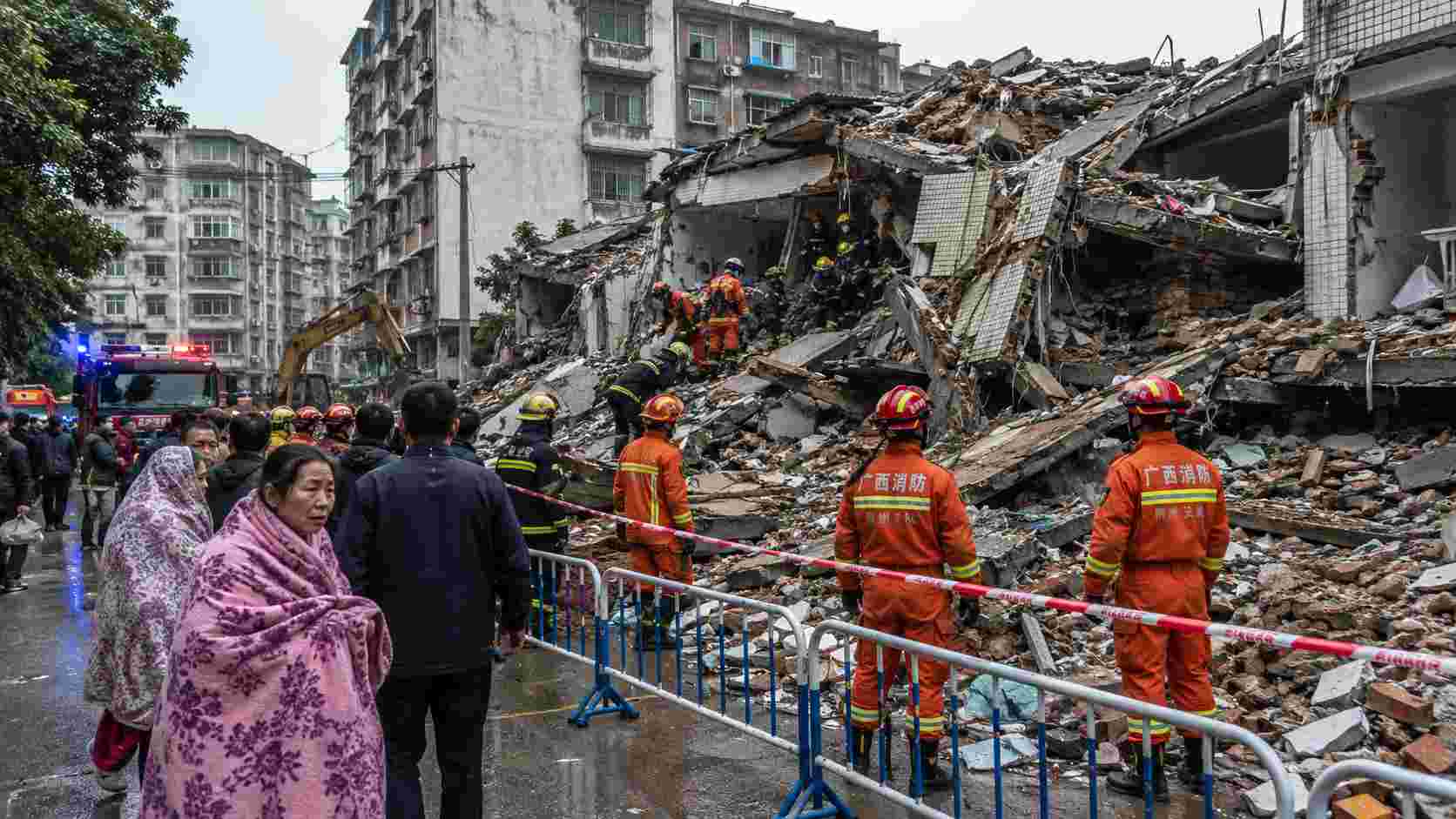
Guangxi earthquake damage has left Liuzhou under emergency response after a magnitude 5.2 quake struck Liunan District at 12:21 a.m. Beijing time on May 18, 2026. Authorities and state media reported two deaths, thousands of evacuations and collapsed buildings as search, rescue and safety checks continued through the morning.
The quake hit a populated part of the Guangxi Zhuang Autonomous Region in southern China, with the China Earthquake Networks Center placing the epicenter in Liunan District at a depth of 8 kilometers. The immediate consequence was not only the loss of life but also the rapid movement of residents out of damaged or potentially unsafe housing.
Context
Liuzhou is an industrial city in Guangxi, a region better known for karst landscapes and manufacturing than for catastrophic earthquakes. A magnitude 5.2 event is moderate by global seismic standards, but shallow earthquakes can produce serious damage when they strike near homes built before stronger seismic protections or in areas with vulnerable older structures.
The timing also mattered. The quake struck shortly after midnight, when many residents were indoors and asleep. That raised the risk of people being trapped inside damaged buildings and forced local officials to move quickly on rescue, medical treatment and evacuation.
Mechanism
According to CENC data cited by state media, the earthquake occurred at a shallow depth of 8 kilometers. Shallow tremors release energy closer to the surface, which can intensify local shaking even when the magnitude is not extreme.
Local emergency officials organized search and rescue, sealed off dangerous areas and began inspections of housing, roads, bridges, utilities, mines and potential geological hazards. The goal was to find missing or trapped people, prevent secondary accidents and determine which homes remained unsafe.
Stakeholders
The people most directly affected are residents of Liunan District, especially those whose homes collapsed or were judged unsafe. More than 7,000 people were transferred from affected areas, creating immediate needs for shelter, food, medical care and clear information about when they may return.
Emergency responders, firefighters, police, construction inspectors, transport officials and utility workers are under pressure to stabilize the area. Local and national authorities also face scrutiny over how quickly they can verify casualties, restore normal life and reduce the risk from aftershocks or weakened structures.
Data and Evidence
Xinhua reported that the quake struck Liunan District at 0:21 a.m. on May 18, 2026, with a magnitude of 5.2 and a depth of 8 kilometers, citing the China Earthquake Networks Center. An early local command report said 13 buildings had collapsed, four people had been hospitalized, three people were initially missing and more than 7,000 residents had been transferred.
Reuters later reported that two people had been killed and that search and rescue work was continuing. Chinese reports also said the State Council earthquake relief office and the Ministry of Emergency Management activated a national level-four earthquake disaster emergency response, while the China Earthquake Administration launched a level-three emergency service response.
By later morning updates, Chinese-language reports citing Xinhua and local authorities said two people had died and at least one elderly trapped resident had been rescued with stable vital signs. These updates indicate that the casualty and missing-person figures changed as rescuers reached collapsed structures.
Analysis
The strongest explanation for the scale of disruption is the combination of a shallow quake, nighttime timing and building vulnerability in the immediate impact zone. A 5.2-magnitude quake usually does not produce mass destruction across a broad region, but it can damage older, weaker or poorly reinforced structures close to the epicenter.
The evacuation figure is therefore central to the story. Moving more than 7,000 people does not necessarily mean all their homes collapsed; it shows officials treated structural safety as a wider risk. In earthquakes, walls, stairwells, roofs and adjoining buildings can remain dangerous even after the main shaking stops.
Counterpoint
The available reporting does not yet provide a complete damage assessment. Some figures were reported at different times: early official reports listed three missing people, while later reports confirmed two deaths and continued rescue operations. That means the final toll, exact number of damaged buildings and long-term displacement figures may change.
There is also limited public detail so far on why specific buildings collapsed. Without a formal engineering assessment, it would be premature to assign the damage to construction quality, soil conditions, aftershocks or any single cause.
Consequence
For Liuzhou, the immediate consequence is a public-safety operation: evacuations, medical treatment, rescue searches and inspections of buildings and infrastructure. Roads and transport links could also face restrictions where officials find damage or need to keep rescue routes open.
For Guangxi and national emergency authorities, the quake creates a test of rapid response in a region not usually associated with China’s deadliest seismic disasters. The response will likely focus on locating anyone still unaccounted for, sheltering evacuees and deciding which damaged homes must be repaired, reinforced or demolished.
What to Watch
The next key developments are updated casualty figures, the status of missing or rescued residents and the results of building safety inspections. Officials may also release more information on aftershocks, temporary housing and whether schools, factories or transport routes in Liunan District need longer closures.
Another important question is whether emergency inspections identify wider structural risks beyond the 13 collapsed buildings initially reported. If more buildings are found unsafe, the evacuation could last longer and affect more families than the first figures suggest.
Sources
Sources = Update: 5.2-magnitude quake strikes south China's Guangxi: CENC — Xinhua — May 18, 2026 Sources = 3 missing after 5.2-magnitude earthquake hits south China's Guangxi — Xinhua via People's Daily Online — May 18, 2026 Sources = Earthquake hits southwest China; thousands evacuate, buildings collapse — Reuters — May 18, 2026 Sources = 中国地震局对广西柳州市柳南区5.2级地震启动三级应急服务响应 — Xinhua — May 18, 2026 Sources = 广西柳州发生5.2级地震,已致3人失联 — The Paper citing Guangxi News Channel — May 18, 2026 Sources = 广西柳州凌晨5.2级地震 已致2人死亡 91岁长者获救 — HK01 citing Xinhua and local authorities — May 18, 2026