
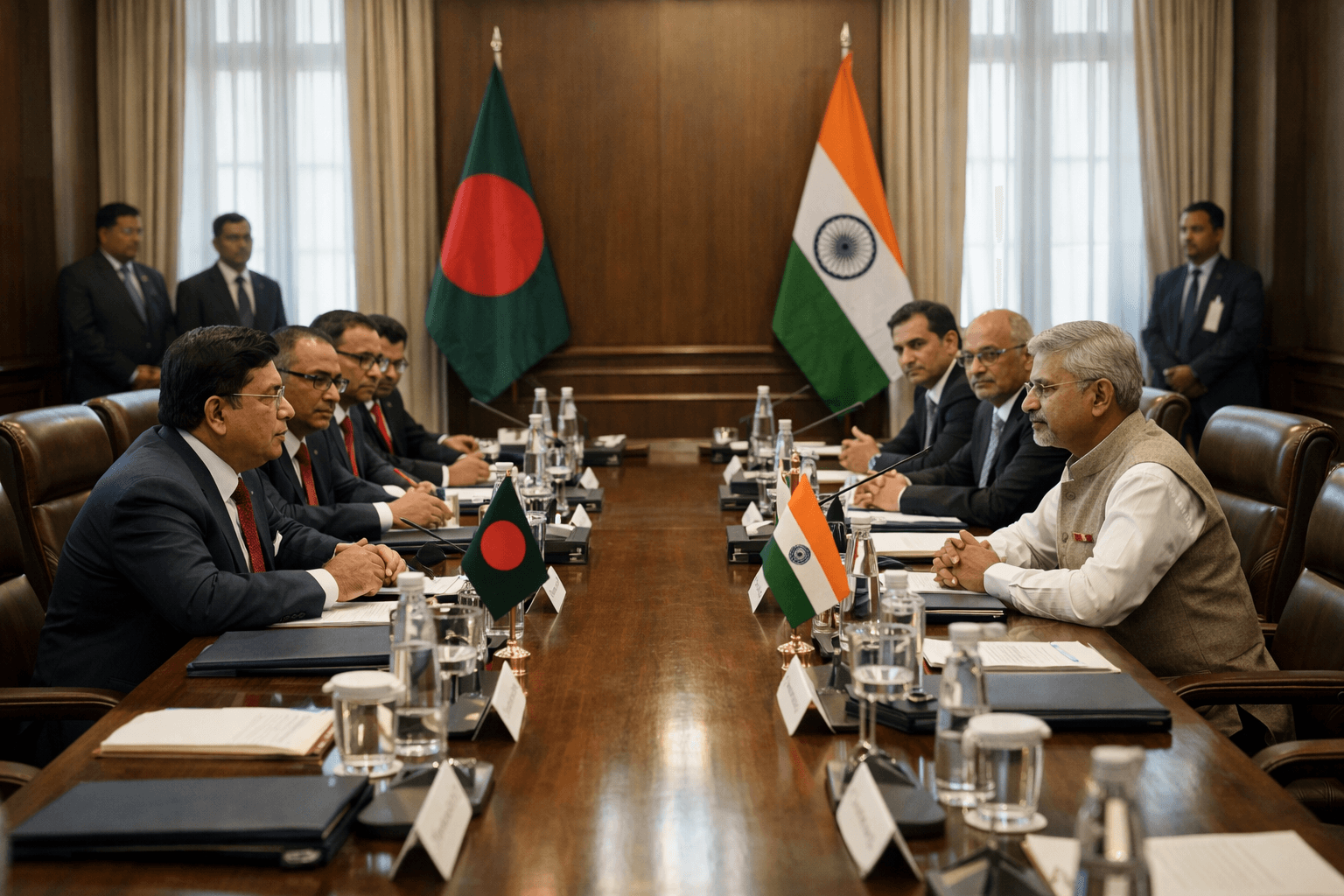
Bangladesh India fuel imports moved to the center of bilateral talks on April 8, 2026, when Bangladesh’s foreign minister asked New Delhi to increase supplies of diesel and fertiliser. The request comes as Bangladesh faces tighter fuel availability and price volatility linked to disruptions affecting Middle East supply routes. India signaled it would consider the request, while the two sides also discussed travel and visa easing and deeper security coordination.
What Dhaka asked for in New Delhi
Bangladesh’s Foreign Minister Khalilur Rahman held meetings in New Delhi with India’s External Affairs Minister S. Jaishankar and Petroleum and Natural Gas Minister Hardeep Singh Puri, among other senior officials, in what was described as the new government’s first ministerial-level visit to India.
In those meetings, Bangladesh formally sought higher volumes of diesel from India and raised fertiliser supply needs as well. Bangladesh’s public messaging framed the request as a response to global supply-chain disruption and tighter availability of refined fuel.
The discussions also covered travel and visa procedures for Bangladeshis, including for medical and business travel, and security cooperation, according to official statements and reporting.
Why this matters now
1) Near-term fuel security for Bangladesh
For Bangladesh, increased diesel deliveries from India could reduce short-run supply risk when global markets are volatile. Diesel is a workhorse fuel across agriculture, transport, and small industry, so even a modest improvement in availability can ease immediate bottlenecks.
This is not a structural fix to Bangladesh’s wider energy dependence, but it can act as a stabilizer when shipments from traditional supply sources are delayed or priced unpredictably.
2) Fertiliser supply and food inflation pressure
Fertiliser supply is an input story that can quickly become a food-price story. If fertiliser availability tightens during key planting windows, farmers face higher costs or lower application rates, which can feed through to crop yields and retail prices.
Additional fertiliser supply from India would not automatically translate into lower food inflation, but it can reduce one specific pressure point: input scarcity.
3) Terms matter: pricing, credit, and FX outflows
The economic consequence hinges on the deal mechanics. If more diesel and fertiliser arrive on commercial terms, Bangladesh’s import bill can rise even as supply stabilizes. If deliveries involve deferred payment, concessional pricing, or other financing support, the near-term foreign exchange strain could be smaller.
In other words, the headline is supply, but the real story for policymakers and markets is the pricing formula, payment timing, and volume commitments.
4) A diplomatic signal as relations improve
The request is also a marker of warmer engagement after a period of strain in Bangladesh–India ties. A ministerial visit focused on practical deliverables—fuel, fertiliser, visas, and security—signals both sides see value in lowering friction, at least on transactional cooperation.
What was also on the table
Alongside Bangladesh India fuel imports, the talks included easing travel processes and visa procedures. For households, that is a concrete pressure valve: visa constraints hit medical travel, education plans, and cross-border business logistics.
Security coordination was another track, reflecting India’s and Bangladesh’s shared interest in border management and broader regional stability. The details discussed publicly were limited, but the topic’s inclusion points to a broader effort to normalize official channels.
What happens next
The next steps are likely to be technical and transactional: volume commitments, delivery schedules, logistics, and payment terms. If India’s side follows through on considering the request “readily and favourably,” the early signal would be quicker shipment scheduling or short-term supply assurances.
If deliveries increase, the key indicator to watch will be whether Bangladesh can maintain steadier domestic diesel availability and avoid rationing or spot shortages during high-demand periods. On fertiliser, the more meaningful test is whether supplies arrive ahead of the next major agricultural input cycle.
Bangladesh India fuel imports may therefore be the first visible output of a broader reset, but its real impact will be measured in the fine print: timing, price, and reliability of delivery.